8. Cerberus Universal Mount
Dedicated technology page with role, rationale, current bridge solution, implementation path, options, and integration particulars.
Back to this item in New Technology Catalog
Open full New Tech Catalog
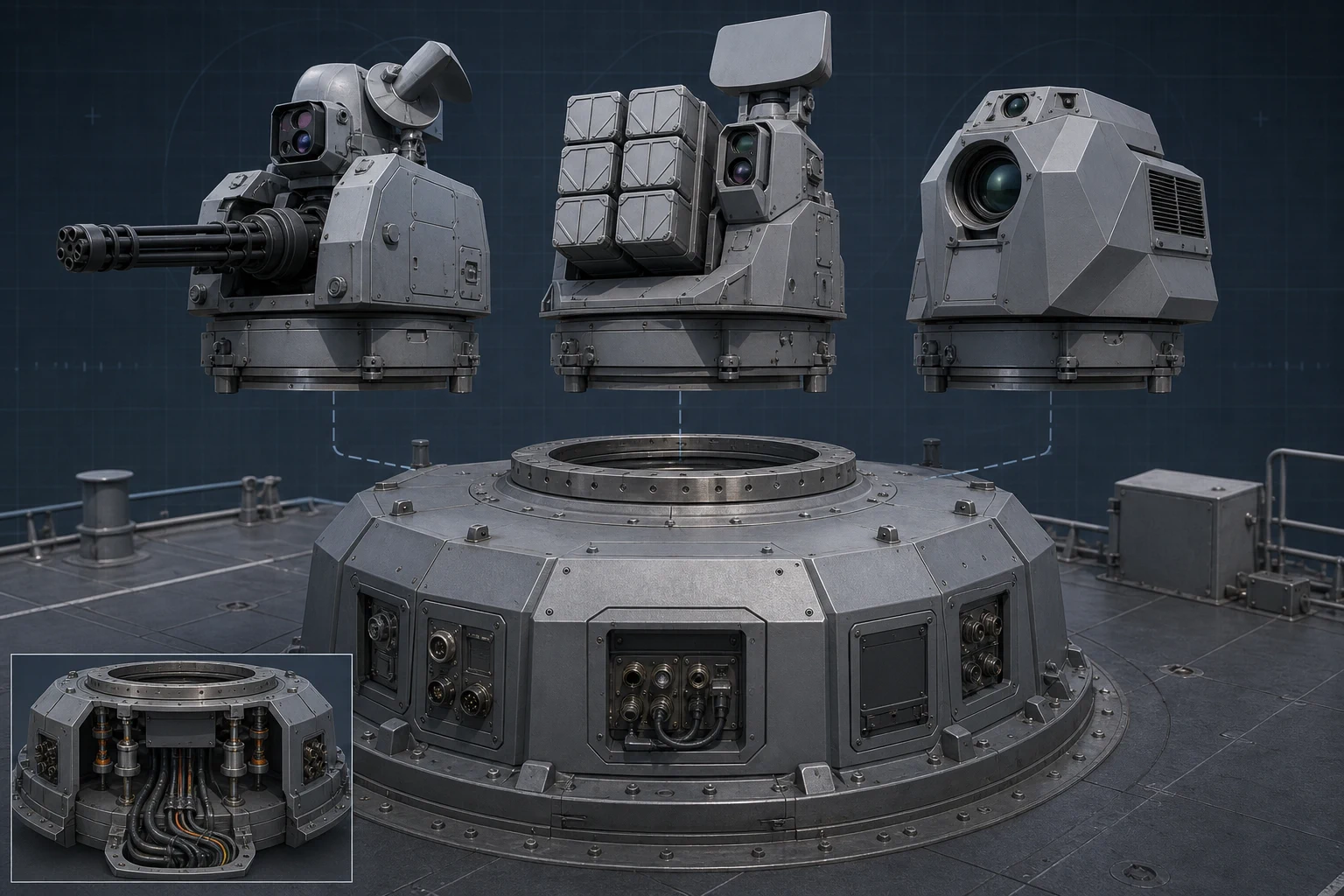
Cerberus concept: one shock-rated mechanical, power, cooling, and data interface supporting interchangeable gun, missile, and directed-energy terminal-defense packages.
Legacy Payload Adapter Studies
Each payload remains on its existing Navy-certified foundation until its separate Cerberus adapter completes structural, shock, power, cooling, data, fire-control, maintenance, firing-arc, and safety qualification. These renderings show the proposed interface concept, not completed engineering.
Phalanx Adapter
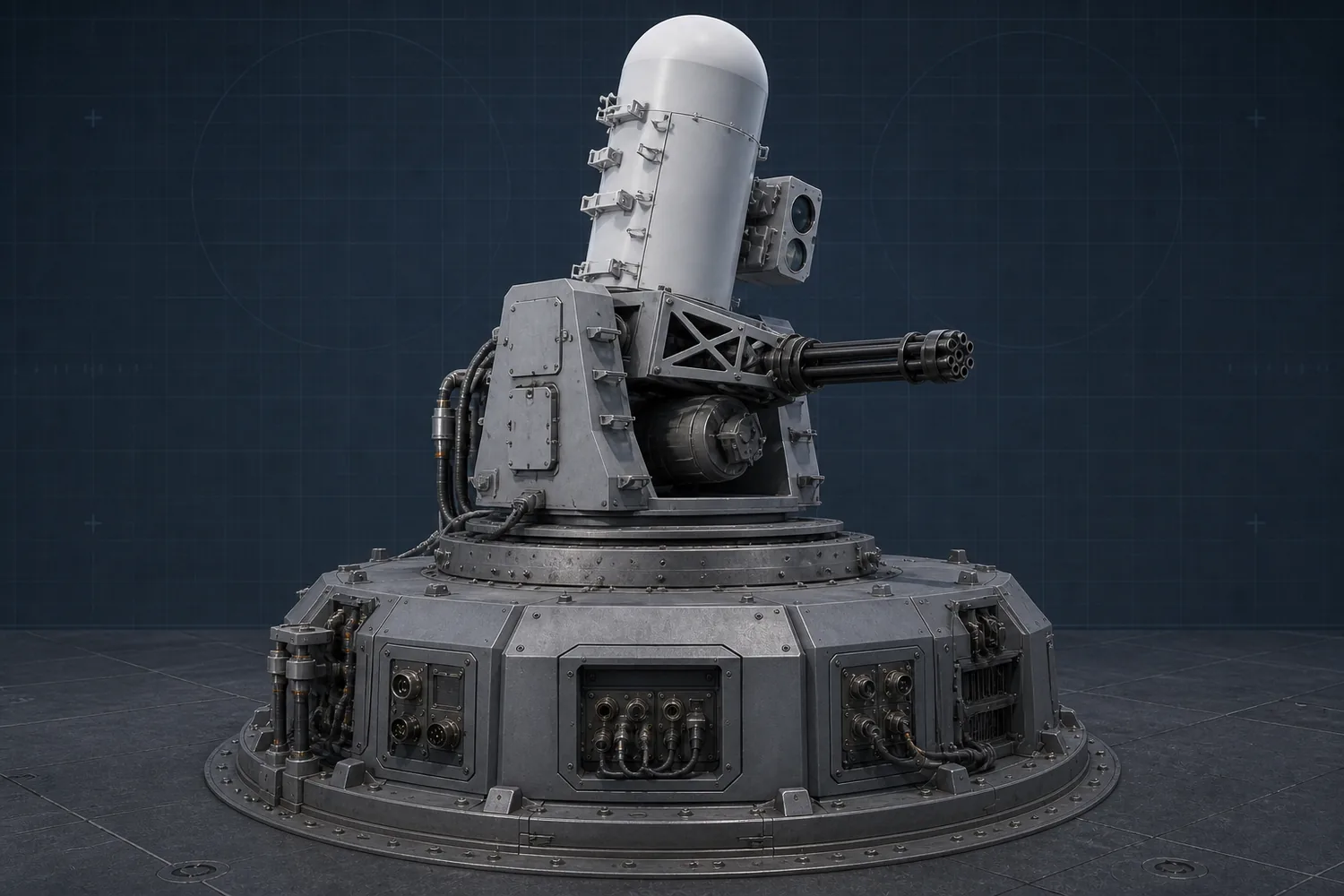
Gun, radar, local services, and shock loads pass through a Phalanx-specific adapter into the common Cerberus position.
SeaRAM Adapter
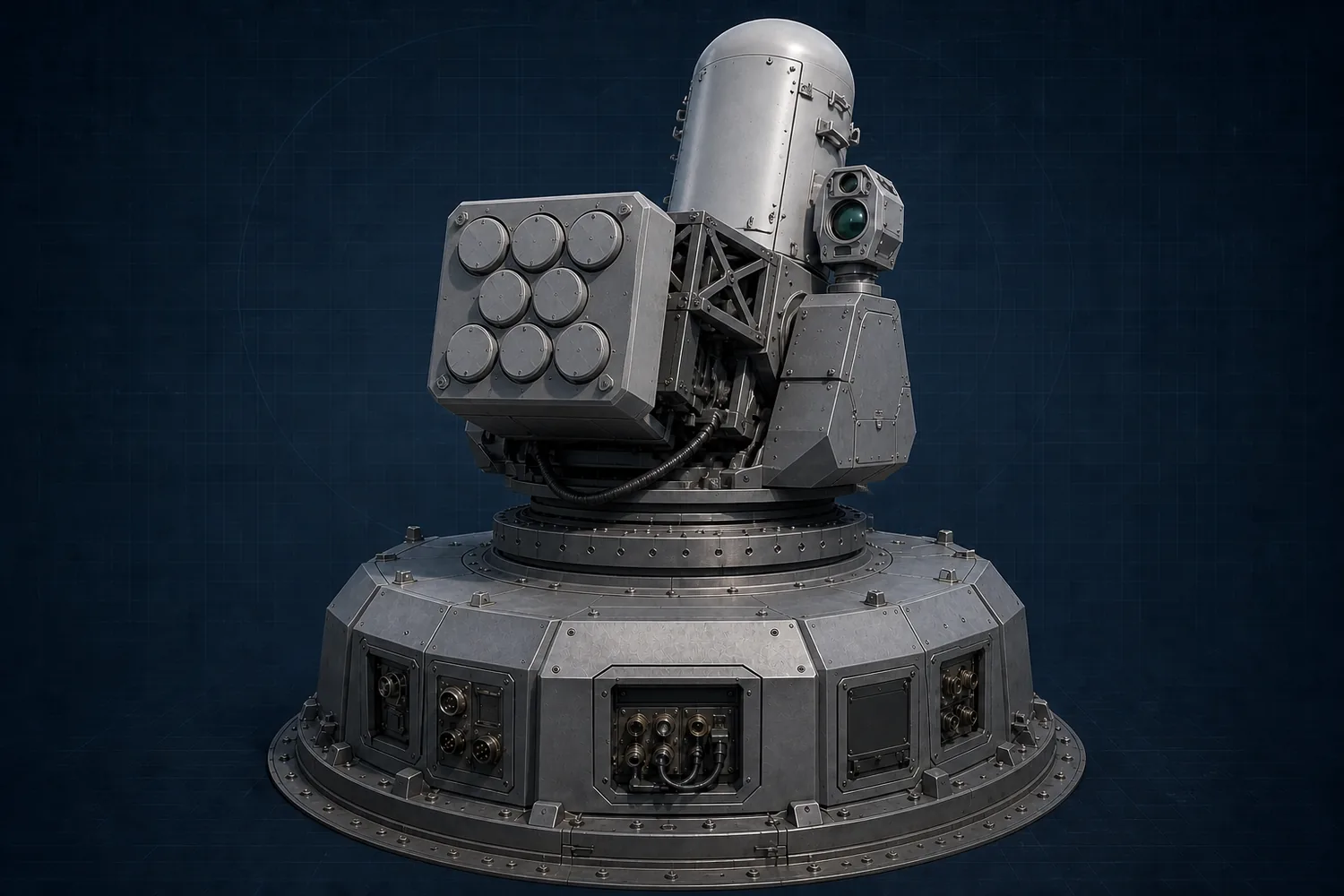
Conceptual arrangement only; the certified SeaRAM shipset controls final launcher, sensor, clearance, and service geometry.
HELIOS Adapter
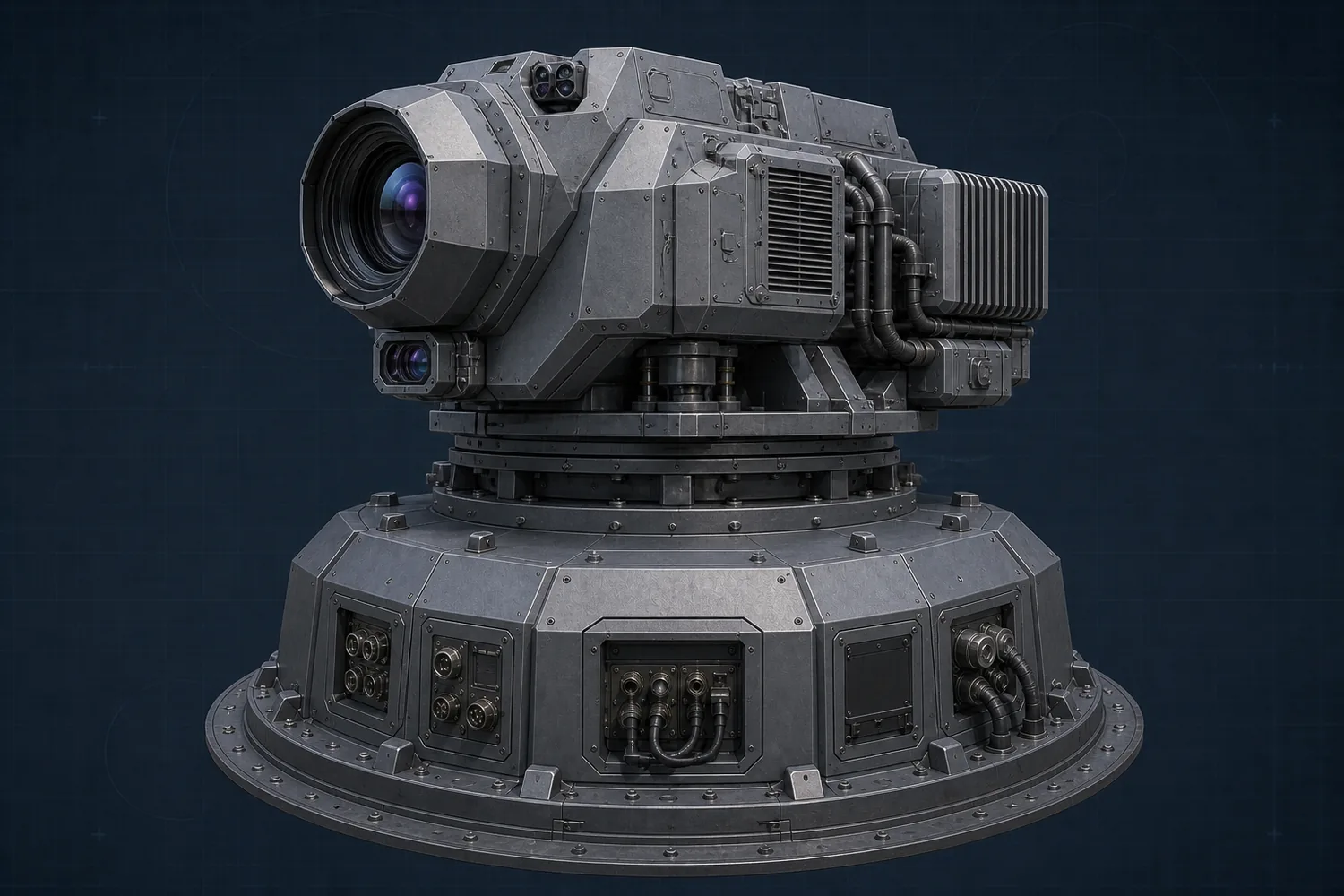
The HELIOS path adds weapon-specific optical, thermal-management, power-conditioning, and combat-system interfaces above the common foundation.
Class Installation Views
The approved ship renderings remain clean baseline views without Cerberus payloads installed. These separate configuration studies show the fixed Cerberus positions and class-specific defensive density.
What It Is
- Mount type: standardized interface, not a single weapon.
- Power parameter: up to 600kW per mount path in source architecture notes.
- Supports: complete CIWS, RAM/SeaRAM, DEW growth, and allied-compatible integrated terminal-defense options.
- Light 30 mm, .50-caliber, MANPADS, and utility payloads use the separate SCUTUM interface.
- Purpose: remove vendor lock and enable rapid defensive reconfiguration.
Why We Are Doing It
- Enable one fleet-standard mount interface for multiple defensive systems.
- Reduce vendor lock and simplify cross-class sustainment and training.
Used Today / What It Counters
- Used today: close-in defense exists fleet-wide, but often through class-specific mount/integration paths.
- Counters: vendor lock and hardwired hull-specific weapon positions that slow upgrades.
Current Stop Gap
- Legacy fixed mount arrangements and class-specific integration pathways.
Next Flight Implementation Steps
- Freeze mechanical, electrical, cooling, and data interface standards.
- Qualify legacy-to-Cerberus adapter paths for CIWS/RAM/SeaRAM continuity.
- Make Cerberus the default mount baseline for next-flight installs.
Options and Styles
- Mount Options: Phalanx-class CIWS, RAM/SeaRAM, HELIOS or other qualified directed-energy systems, and future integrated point-defense systems.
- Integration Style: One government-owned interface standard so mounts are not hardwired to a single hull/vendor path.
- Capability Style: kinetic-only, DEW-only, or mixed defensive belts by mission package and class allocation.
- Partner Style: allied-compatible systems can be adapted without hull redesign.
- Adapter Style: supports qualified adapter kits for additional close-in defense payloads and mission-specific mount packages.
- Fleet count baseline: current fixed-mount planning remains 3 Cerberus positions on FFG, 5 on DDG, and 8 on CAG.
- Expansion rule: additional Cerberus capacity can be created through IWM, IMM, or ISO insertion, but only by trading away something else. IWM growth gives up primary weapon volume, IMM growth gives up a primary mission module, and ISO growth makes the ISO package itself a terminal-defense mission fit that must carry or receive the needed power, cooling, and control support.
Mounting and Integration Particulars
- Cerberus is itself the terminal-defense mount standard and can host CIWS, RAM/SeaRAM, and qualified DEW options.
- Physical standard: a 15-foot-diameter armored foundation with a common rotating collar, standardized bolt circle, shock isolation, power, cooling, data, drainage, and maintenance access.
- Recess rule: the foundation is set into a protected deck pocket. An unused position closes flush under a weather-tight armored cover; an installed payload projects only high enough to preserve its firing or sensor arc.
- Inserted as certified mounting architecture under common electrical, cooling, and control interfaces.
How It Works in Layered Defense
- Detection and tracking feed from SPY-6, fire-control radar, EO/IR, and EW tracks into Aegis/CANES combat management.
- Combat management assigns each Cerberus mount by threat lane and geometry, enabling rapid mixed engagement across drones, cruise missiles, and small-boat swarms.
- Mount mix can be changed by class and block flight so the same hull supports kinetic, DEW, or blended close-in defense without structural redesign.
- Cerberus works as the terminal layer tied to decoys, EW, and medium-range interceptors for a full offense-defense continuum.
Cerberus and Modular Doctrine
- Cerberus mount architecture pairs with IWM/IMM/ISO and SCUTUM doctrine: major weapons use IWM, integrated terminal defense uses Cerberus, light local defense uses SCUTUM, mission payloads use IMM, and rapid counter-UAS/EW scaling uses ISO modules.
- IWM is the cleaner growth path for extra Cerberus capacity because it can be designed around stronger ship-service integration, but it still gives up offensive weapon real estate. IMM and ISO growth are possible, but they sacrifice mission-module capacity and are best treated as deliberate mission-posture choices rather than normal baseline configuration.
- This makes the most sense for narrow high-threat escort cases, such as Strait of Hormuz-style convoy or chokepoint defense, where extra terminal-defense density matters more than carrying the full normal strike or mission-module mix.
- Cerberus is also a future-tech standard: new close-in guns, DEW, missile, counter-drone, or other terminal-defense packages should be designed to the Cerberus mount and service interfaces so they can replace older fits during refit or appear on new hulls without structural redesign.
- This keeps force-multiplier coverage active while supporting blue-water self-reliance with fleet-common parts and training.